

Articles
Hi-Vis Workwear Standards in Australia: What AS/NZS 4602 Means for Your Business
Mar
This guide explains what the Australian and New Zealand hi-vis standards actually require, what the Day/Night classification system means in practice, and how to make sure the hi-vis workwear you’re buying for your team is genuinely compliant — not just orange. All compliant brands mentioned in this guide, including Syzmik and JBs Wear, are available at wholesale prices through PS Apparel.
Important note: This article provides general guidance on Australian hi-vis standards for informational purposes. Always consult your state’s Work Health and Safety regulator and your specific industry guidelines to confirm the exact requirements for your worksite and application.
The relevant standards: AS/NZS 4602.1 and AS/NZS 1906.4
Hi-vis workwear in Australia is governed by two interconnected standards:
AS/NZS 4602.1:2011 — High visibility safety garments. This is the main standard that defines the design and performance requirements for hi-vis workwear: how much background fabric is required, where retroreflective tape must be positioned, how the garment must be constructed to be classified as compliant.
AS/NZS 1906.4:2010 — Retroreflective materials and devices for road traffic control purposes. This standard covers the performance requirements for the retroreflective tape used on hi-vis garments — how much light it must reflect, and how it must perform after laundering.
When you see a hi-vis garment described as “AS/NZS 4602.1 compliant,” it means the garment meets both standards — the construction and the tape performance. Garments from reputable brands like Syzmik and JBs Wear are tested and certified to these standards before they reach the market.
Understanding the Day/Night classification system
AS/NZS 4602.1 divides hi-vis garments into two classifications based on the conditions in which they are designed to be visible:
Class D (Day only)
Class D garments use only fluorescent background fabric — the bright orange, yellow-green, or red-orange colour that makes workers visible in daylight conditions. They do not include retroreflective tape. Class D garments are suitable for worksites where work is only performed during daylight hours and there is no risk of workers being exposed to vehicle headlights or low-light conditions.
Class N (Night only)
Class N garments are designed for visibility in darkness — they include retroreflective tape that reflects light from vehicle headlights back toward the driver, but they may not incorporate fluorescent background fabric. Class N garments alone are not suitable for daylight use.
Class D/N (Day and Night — the most common)
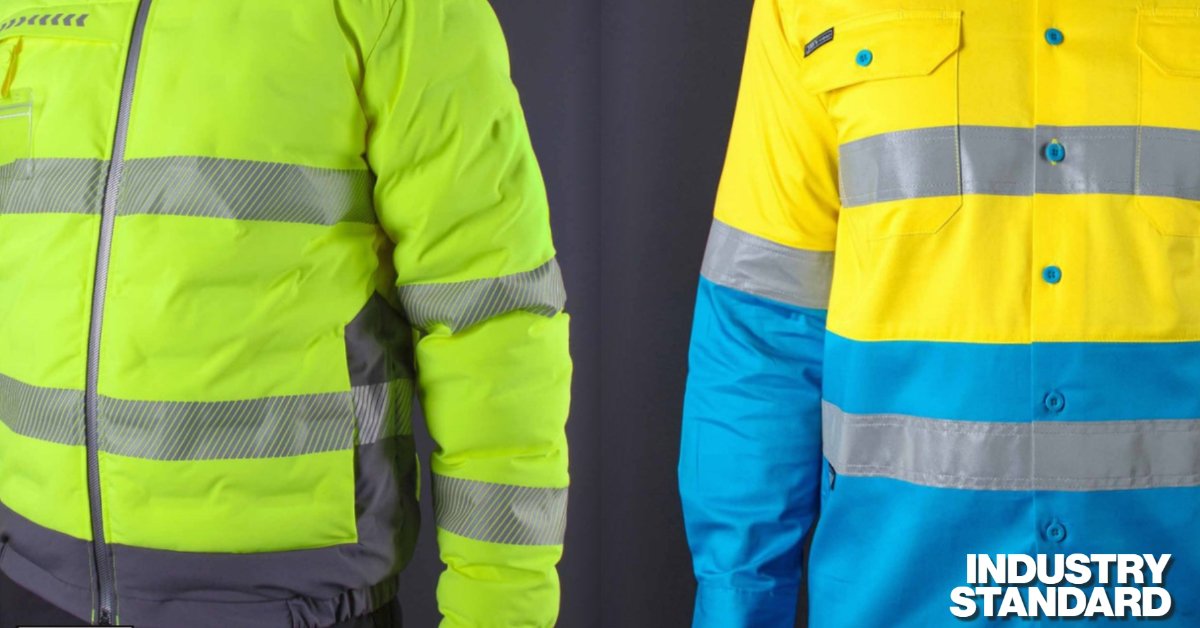
Class D/N garments combine both fluorescent background fabric and retroreflective tape, making the wearer visible in both daylight and low-light or night-time conditions. This is the most commonly required classification across Australian construction, civil, and road work environments. When in doubt about which class is required, Class D/N is typically the safe default for any outdoor or mixed-condition worksite.
| Classification | Fluorescent fabric | Retroreflective tape | Use case |
|---|---|---|---|
| Class D | Required | Not required | Daylight-only worksites |
| Class N | Not required | Required | Night-only worksites |
| Class D/N | Required | Required | Day and night, most outdoor worksites — recommended default |
Approved colours for hi-vis garments
Not just any bright colour qualifies as compliant hi-vis. AS/NZS 4602.1 specifies three approved background colours for hi-vis garments:
- Fluorescent yellow-green (the most common — used across construction, mining, and road work)
- Fluorescent orange-red (commonly used in mining and some civil applications)
- Fluorescent red (less common, used in specific industries)
The fluorescent dye in these fabrics is what makes them highly visible in daylight — particularly in low-angle light conditions at dawn, dusk, and overcast days when risk is highest. Non-fluorescent colours, even bright ones, do not qualify as compliant background fabric regardless of how bright they appear to the naked eye.
Minimum coverage requirements
AS/NZS 4602.1 specifies minimum amounts of background fabric and retroreflective tape by garment type. While the exact measurements are detailed in the standard itself, the practical implication for buyers is straightforward: you cannot cut corners on coverage. A hi-vis vest that barely meets the minimum, or a garment where the tape placement doesn’t meet the required configuration, is not compliant — even if it looks like it should be.
This is one reason why buying hi-vis from trusted, certified brands matters. Syzmik and JBs Wear both produce garments tested to AS/NZS 4602.1 — the coverage, tape placement, and construction meet the standard as designed. When you buy certified garments from reputable suppliers, compliance is built in.
Employer obligations under WHS legislation
Under Work Health and Safety (WHS) legislation across Australian states and territories, employers have a duty to provide Personal Protective Equipment (PPE) — including hi-vis clothing — where it is required to protect workers from identified hazards. This duty includes:
- Conducting a risk assessment to determine when hi-vis is required
- Selecting garments that meet the appropriate AS/NZS standard for the risk
- Providing hi-vis PPE at no cost to workers where it is required
- Ensuring garments are maintained in good condition and replaced when worn or damaged
- Training workers on when and how to wear hi-vis correctly
A faded, torn, or excessively soiled hi-vis garment is no longer compliant — the fluorescent fabric loses its brightness over time and with washing, reducing visibility. Most safety experts recommend replacing hi-vis garments when they show visible signs of fading, which typically occurs after 25–50 industrial wash cycles depending on fabric quality.
Can you print or embroider on hi-vis clothing?
Yes — and this is one of the most common questions PS Apparel receives about hi-vis workwear. Company logos, employee names, trade licence numbers, and other identifying information can all be added to hi-vis garments, provided the decoration does not:
- Cover or obscure the required minimum areas of fluorescent background fabric
- Cover or interrupt retroreflective tape segments
- Reduce the overall visibility of the garment
In practice, a chest logo or back logo printed in a contrasting colour on the fluorescent fabric is perfectly acceptable and widely done across Australian worksites. The key is placement — decorations should be in areas where they don’t interfere with the tape configuration or reduce the garment’s compliant background fabric area below the minimum.
PS Apparel regularly prints company logos and branding on hi-vis shirts, polos, and vests for construction companies, trades businesses, and civil contractors across Australia. Have a browse to our custom printing service, or contact us for a quote on branded hi-vis workwear.
Choosing compliant hi-vis workwear: what to look for when buying
When purchasing hi-vis workwear for your team, look for these indicators of genuine compliance:
- Standard marking on the garment or label: Compliant garments should reference AS/NZS 4602.1 and/or AS/NZS 1906.4 on their labelling or product documentation.
- Classification label: The garment should be clearly marked as Class D, Class N, or Class D/N.
- Reputable brand: Established workwear brands that operate in the Australian market are required to test and certify their products. Unknown brands sourced cheaply overseas may not meet the standard even if they appear to.
- Condition: Even a genuine compliant garment becomes non-compliant when faded, torn, or contaminated with materials that reduce reflectivity.
Browse PS Apparel’s full range of compliant wholesale hi-vis workwear including Syzmik and JBs Wear styles — all certified to Australian standards and available blank or with your company branding printed or embroidered in-house.
Need hi-vis workwear for your team — blank or with your logo printed? PS Apparel supplies certified hi-vis clothing at wholesale prices with Australia-wide delivery, and we can add your branding in-house.


